
Should You Replace One Garage Door Spring or Both?
Published Updated
Replace both springs. On a two-spring door, the spring that didn't break has done the exact same number of open-and-close cycles as the one that did, so it's not far behind. In Fremont, Navarro Garage Door replaces a single torsion spring from $200 installed and the pair from $350.
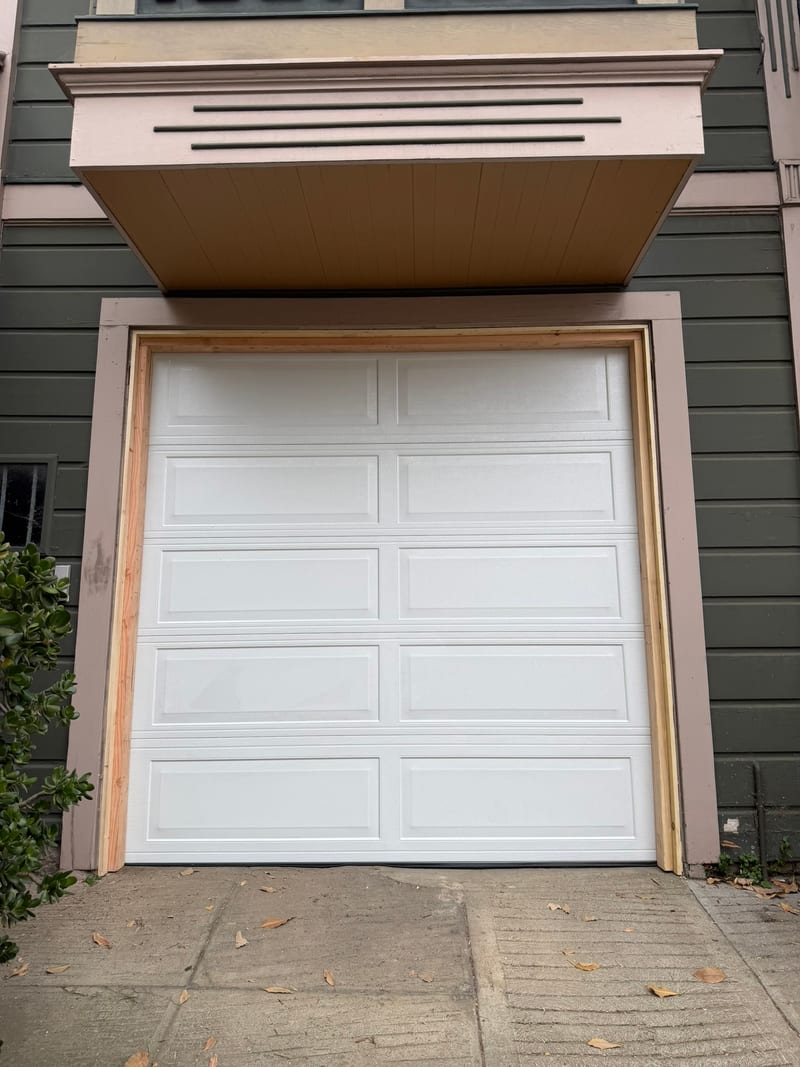
The question usually comes up right after a spring has snapped and the door won't budge. The short version: replace both. The longer version is about cycles, not years, and it explains why the second spring is close to failing too.
Why Cycles Matter More Than Years
Springs aren't rated in years. They're rated in cycles, one cycle being a full open and close. A common torsion spring is built for about 10,000 cycles. A household that opens the garage door four times a day, once out in the morning, once back for lunch, twice more for evening errands, burns through that rating in around seven years.
That's an average, not a guarantee. A household with three drivers and a teenager who forgets things opens the door a lot more than four times a day, and the spring gets there faster. A retired couple with one car might stretch it past ten years. The number that matters is your own daily count, not the calendar.
So Why Does the Other Spring Matter?
On a two-spring door, both springs move together every single time the door runs. They don't take turns. If one spring has done 9,800 cycles when it snaps, the other one has done 9,800 cycles too. It hasn't been sitting there resting. It's been carrying the same load the same number of times, and it's close behind.
Swapping only the broken spring saves money today, but the second spring is on the same clock, and when it goes that is a second visit and a second disruption. That's why we give you the price for the pair right alongside the single before any work starts, so you can see both numbers before deciding.
What Does the Pair Cost Compared to Two Visits?
A single torsion spring replaced starts at $200 installed, and that job takes about an hour on site. A pair of torsion springs starts at $350 installed, with the door balanced in the same visit. Most of the setup work is shared between the two springs, so the pair costs less than two separate single-spring visits. Where your door lands above those starting prices depends on the spring size and the door's weight, and you hear the exact price before any work starts.
Compare that to paying for one spring now and calling us back in six months for the second. You're paying for a second visit, a second hour of labor, and you're rolling the dice that the door doesn't fail on a Saturday morning when you've got somewhere to be. For more on how we handle the springs themselves, our garage door spring replacement page walks through what's involved.
Where This Comes Up Most in Fremont
Glenmoor and Centerville are where the housing age makes this question likely. Glenmoor Gardens is 32 tracts of detached ranch houses built between 1951 and 1966, about 1,900 homes on roughly 595 acres, and Centerville's housing stock sits in that same 1950 to 1979 window. These are doors that have been cycling for decades, often on their original springs or a first replacement from years back.
On doors this old, springs and cables have run the same cycles side by side, so they tend to wear out together. Ardenwood was built about twenty years later, so its doors have run fewer cycles. If you're not sure which category your street falls into, our Fremont service area page covers the whole city, Glenmoor and Centerville included.
What Do We Actually Carry on the Truck?
We carry the common torsion spring sizes on the truck, so a pair can usually go in on the same visit as a single. The choice between one spring and two is yours, and we give you both prices before any work starts.
We also carry cable, since a frayed cable often shows up alongside a tired spring, and for the same reason: cables wear in pairs too. If your door is off track or grinding when it opens, that's usually a separate issue from spring wear, and worth a look before you assume it's the springs at all.
What If Only One Spring Actually Broke?
Sometimes a spring breaks early, before it's near its cycle count, because of rust, a manufacturing flaw, or a door that's been out of adjustment and putting extra strain on one side. In that case, the other spring might genuinely have life left, and replacing just the one isn't unreasonable.
We can usually tell the difference on site. A spring that failed from age and cycles looks different from one that snapped from a defect or an alignment problem. We'll tell you straight what we find on your door, not just push the pair automatically. But if your door has been running normally and one spring goes, cycle math says the other one's clock is running too, and that's the default we'd lean toward.
Common questions
Can I just replace the spring that broke and leave the other one alone?
You can, but the second spring has the same cycle count as the one that failed. It's usually weeks or months from doing the same thing, so replacing both at once saves a second visit.
How do I know how many cycles my spring has left?
You don't get an exact number without a log, but four opens a day on a 10,000-cycle spring works out to about seven years. Count your household's daily opens to estimate where you stand.
Does a heavier door use up spring cycles faster?
Cycle count is about how many times the door opens and closes, not the weight, though a heavier door puts more strain on each cycle. Weight affects wear on rollers and the opener more than spring life.
Will the new spring match the old one if I only replace one?
Not always. Springs are matched to the door's weight, and an older single spring paired with a new one can wind unevenly. That mismatch is another reason the pair is usually the better call.
Is a two-spring door safer than a one-spring door?
Not inherently. Either setup can fail, and a broken spring on either kind leaves the door too heavy to lift by hand. The number of springs is about the door's weight, not safety design.